Friday 5 April 2024 | 5pm Beirut Time | Barzakh Bookshop + online
Discussion with author Andreas Mal In conversation with Nadia Bou Ali
Discussion with author and researcher Andreas Malm on his books “Fossil Capital: The Rise of Steam Power and the Roots of Global Warming” and “How to Blow Up a Pipeline: Learning to Fight in a World on Fire”. The discussion will be followed by a screening of the action-thriller “How to Blow Up a Pipeline”, based on Malm’s book and released in 2023.
Free and open to the public The venue is equipped for and welcomes wheelchair users
For live feed, please visit Barzakh’s Instagram page or brzkh.org.
Organized by BICAR (Beirut Institute for Critical Analysis and Research) in cooperation with Barzakh Bookshop
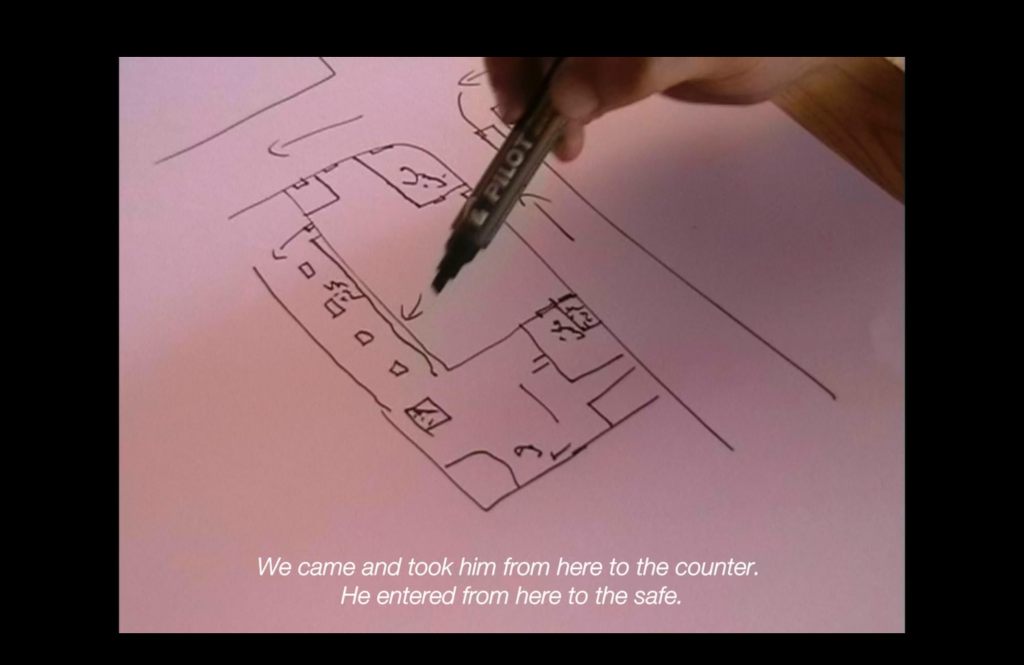
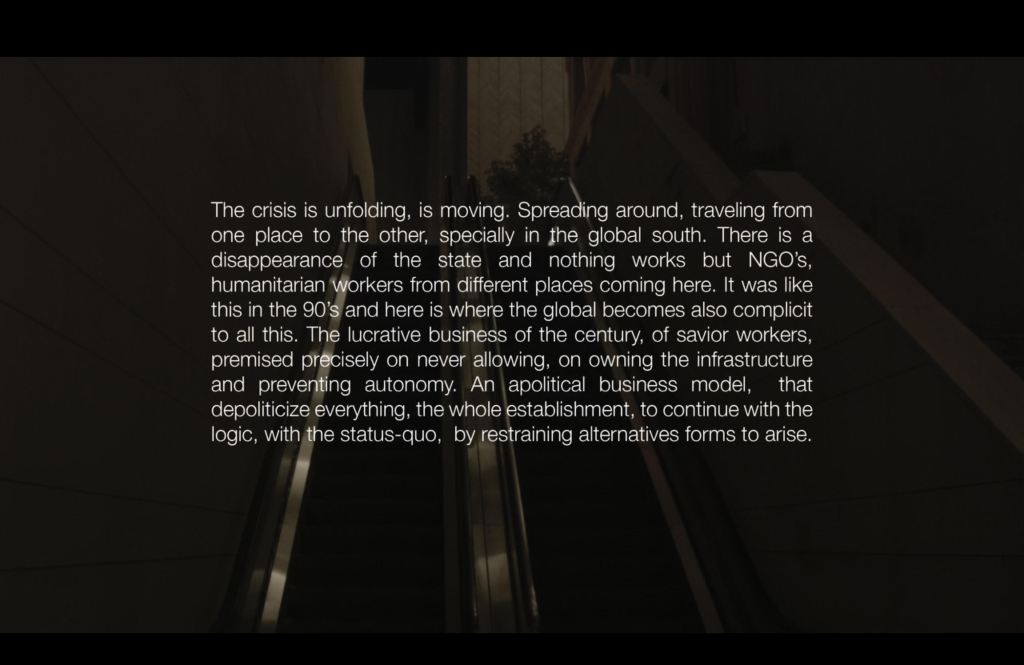
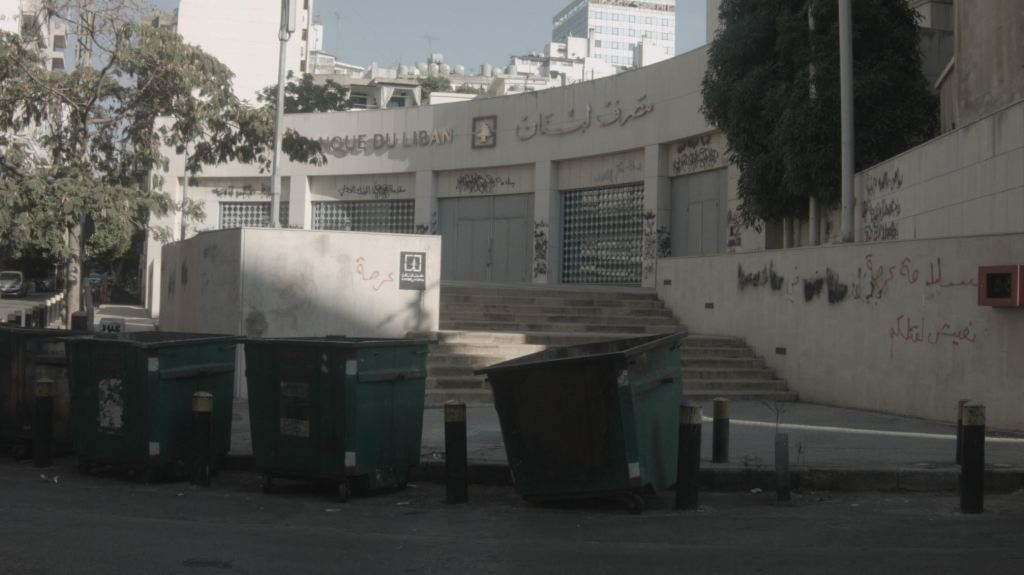
In 2022, the economic crisis in Lebanon had led the country to the brink of total collapse. By the time this film began was completed, more than 16 bank heists had been carried out across the country. Assembling interviews with depositors and the critical theorist Nadia Bou Ali along with archival images and TV material, On Bandits tries to make sense of the surreal situation in which the country finds itself.
Born in São Paulo, Brazil, Gian Gigi Spina is a writer, researcher, and sometimes an artist. He has worked and taught in pedagogical experiments, including International Art Academy Palestine, Escola da Cidade (São Paulo), the Ionion Center for Arts and Culture (Greece) as well as CILAS (Cairo). He is currently learning Arabic, while speaking five other languages, and is constructing an interdisciplinary body of work on the materialization of power in history, narrative and the public sphere. He was part of the residency programs as Capacete and Documenta 14 in Athens (2017), MMAG Foundation in Amman (2018) as well as GEGENWARTE/PRESENCES in Chemnitz, Germany (2020). Recently, he has participated in the Sheffield Film Festival, Les Rencontre d’Arles and the Museum of Modern Art in Rio de Janeiro. His writing has appeared in Mada Masr, Folha de São Paulo, Arts Everywhere, World Policy Institute, and several other independent publications. He lives Cairo and his work can be seen at http://gianspina.com
This event is organized by the Beirut Institute for Critical Analysis and Research (BICAR) for the 2023 Summer School, Is There a Revolutionary Subject? For more information, please visit https://bicarlebanon.org/summerschool/
In collaboration with Beirut Art Center, we will be screening two films by Bahar Noorizadeh. The screenings will be followed by a discussion between the artist and Bassem Saad.
Friday June 23, 2023 | Beirut Art Center | 7pm To register for a place, please write intern@beirutartcenter.org
Teslaism: Economics After the End of the End of the Future (2023) Single-channel video (30’)
Installation view of Teslaism, Tresor 31 Exhibition, Kraftwerk Berlin, 2022, photo by Helge Mundt
Teslaism: Economics After the End of the End of the Future is a third-person racing musical game featuring Elon Musk and his self-driving car/lover and life coach as they drive towards a shareholder meeting in a post-gamified Berlin landscape.
The work takes the newly built Gigafactory in Berlin as a prism to describe the emergence of Teslaism (succeeding post-Fordism) as an upgrade to the system of production and consumption predicated on advanced storytelling, financial worldbuilding, and imagineering “the look of the future.” The Teslaist CEO is a collage artist. Weaving together one tweet, one dance move, one meme after another, he creates a set of perpetually postponed and too-fabulous-to-be-fake narratives to make time make power. If post-industrial Detroit was soundtracked to techno’s futures, the age of Teslaism seeks its own common sonic imaginaries: forms of resistance inhabiting our exceedingly financialized cities.
Teslaism was commissioned for Tresor 31: Techno, Berlin, and the Great Freedom (2022), an exhibition reflecting on three decades of musical evolution, social change, and city development from Berlin to Detroit, told through the lens of techno’s history.
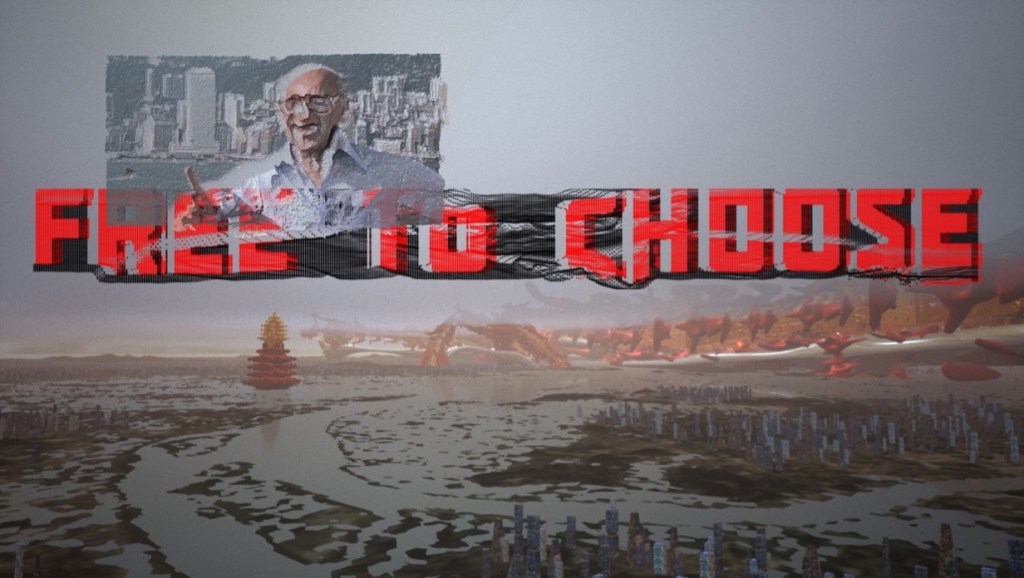
Free to Choose (2023) Single-channel video (36’), text Bahar Noorizadeh, Rudá Babau, and Waste Paper Opera
Still from Free to Choose (2023), courtesy of the artist.
Free to Choose is an operatic financial sci-fi (fi-fi), narrated by Milton Friedman, in which we encounter the credit banking system as a time travelling machine.
In 1997, in post economic crash Hong Kong, Philip Tose, ex-race car driver and CEO of an insolvent company travels to the future to borrow a lump sum from his older self to rescue his business. Hong Kong in 2047 turns out not to be very different from the Hong Kong of “One Country, Two systems”: centralisation has not eradicated nepotism, and activism has become rating activism: young people advocating for free time travel for everyone, including the untrustworthy and the discredited of a corrupt credit system.
In the background is superstar economist and real-life evangelist Milton Friedman’s myth of neoliberalism as represented by Hong Kong: In his long career as a market ideologue and advisor to the conservative governments of the US and the UK, Friedman hailed the city as the modern exemplar of free markets, needless of heavy-handed government planning and control. “If you want to see Capitalism in action, you should go to Hong Kong.”
Much like the economic worlds built in metaverse and gaming platforms today, Hong Kong was the testing ground for the parable of neoliberalism. Once certified in its advanced colony, neoliberalism would return to shape the economic policies of Western powers in the decades to come. In 2023, despite once claiming the highest rate of public housing in the world, Hong Kong now holds one of the deepest wealth gaps and one of the most lucrative real estate markets on the planet.
About the artist Bahar Noorizadeh looks at the relationship between art and capitalism. In her practice as an artist, writer and filmmaker, she examines the conflictual and contradictory notions of imagination and speculation as they suffuse one another. Her research investigates the histories of economics, cybernetic socialism, and activist strategies against the financialization of life and the living space, asking what redistributive historical justice looks like for the present. Noorizadeh is the founder of Weird Economies, a co-authored and socially-connected project that traces economic imaginaries extraordinary to financial arrangements of our time. She completed her PhD at Goldsmiths, University of London.
The discussion will take place in English.
This screening is organized by the Beirut Institute for Critical Analysis and Research (BICAR) in collaboration with Beirut Art Center for the 2023 Summer School, Is There a Revolutionary Subject?
Dziga Vertov’s documentary film Odinnadtsatyy (The Eleventh Year, 1928) is dedicated to the 11th year of the October Revolution. Joining other now canonical films that celebrate the first decade of the Bolshevik Revolution, such as Eisenstein’s October of the same year, Vertov’s film is a hymn to Stalin’s program of the rapid industrialization of the country, and especially the eastern regions of Ukraine.
The film both preludes and crystalizes the contradictions of Stalin’s so-called “second revolution”, otherwise known as the Great Turn, or the Great Break (Velikiy perelom) which launched a massive program of industrialization, and collectivization of agriculture. The film utilizes the techniques of avant-garde filming and montage to render cinematically the transformative power of socialist construction as constitutive of Soviet reality itself. The temporality of the film, as it moves from longer panning shots implying a narrative structure and historical meaning, to rapidly changing frames of nature-man-machine synthesis signifies the revolutionary and avant-gardist overcoming of the past for a future-directed present.
This screening is organized by the Beirut Institute for Critical Analysis and Research (BICAR) for Angela Harutyunyan’s course, “Time and Revolution: Historicity after “the End of History” within the 2023 Summer School, Is There a Revolutionary Subject?
دزيجا فيرتوف، السنة الحادية عشر، 1928 (54)
فيلم دزيجا فيرتوف الوثائقي (السنة الحادية عشرة، 1928) مخصص للسنة الحادية عشرة لثورة أكتوبر. إضافة إلى الأفلام المعتبرة الأخرى التي تحتفل بالعقد الأول من الثورة البلشفية، مثل فيلم أكتوبر لآيزنشتاين في العام نفسه، فيلم فيرتوف هو إشادة ببرنامج ستالين للتطور الصناعي السريع للبلاد، وخاصة المناطق الشرقية من أوكرانيا
يقدم الفيلم ويبلور تناقضات ما يسمى بـ”الثورة الثانية” لستالين، والمعروفة باسم “المنعطف الكبير” أو “الانهيار العظيم” (فيليكي بيرلوم) الذي أطلق برنامجًا ضخمًا للتطور الصناعي والتنظيم الجماعي للزراعة. يستخدم الفيلم تقنيات التصوير والمونتاج الطليعي ليظهر سينمائياً القوة التحويلية للبناء الاشتراكي كمكوِّن للواقع السوفيتي نفسه. إن زمنية للفيلم، حيث ينتقل من اللقطات الطويلة التي تنطوي على بنية سردية ومعنى تاريخي، إلى إطارات متغيرة بسرعة لتوليفة الطبيعة-الإنسان-الآلة، تدل على التغلب الثوري والطليعي على الماضي من أجل حاضر موجه نحو المستقبل.
تم تنظيم هذا العرض من قبل معهد بيروت للتحليل النقدي والبحوث (بيكار) لدورة أنجيلا هاروتيونيان، “الزمن والثورة: التاريخية بعد’ نهاية التاريخ‘” ضمن المدرسة الصيفية لعام 2023، هل يوجد ذات ثورية؟.
Talking Hands / говорящие руки, 2016, 48 min, HD (and 16mm transferred to HD). Dir. Emanuel Almborg
Talking Hands / говорящие руки, is a film about the 1960s Zagorsk school for deaf-blind children outside Moscow and its pedagogy. The school was established by Marxist philosopher Eval’d llyenkov, who, in contention with dominant Soviet ideology, began developing ideas of how human consciousness is socially constituted and emerges in relation to material culture, objects, and tools.
The screening will be followed by a discussion.
This event is organized by the Beirut Institute for Critical Analysis and Research (BICAR) for the 2022 Summer School, Critique and the Desire of Modernity. For more information, please visit https://bicarlebanon.org/summerschool/




 Beirut Institute for Critical Analysis and Research